What Is Insulin Resistance (And Why It Makes Fat Loss So Difficult After 40)
What Is Insulin Resistance (And Why It Makes Fat Loss So Difficult After 40)
Introduction
If you feel like your body is holding onto fat no matter what you do, or your energy crashes throughout the day, insulin resistance may be a key factor.
Insulin resistance is one of the most common—and most misunderstood—metabolic issues affecting fat loss, energy, and long-term health.
Rather than being a lack of effort, insulin resistance reflects how your body is responding to food, hormones, and energy demands.
What Is Insulin Resistance?
Insulin is a hormone that helps regulate blood sugar levels by allowing glucose to enter your cells for energy.
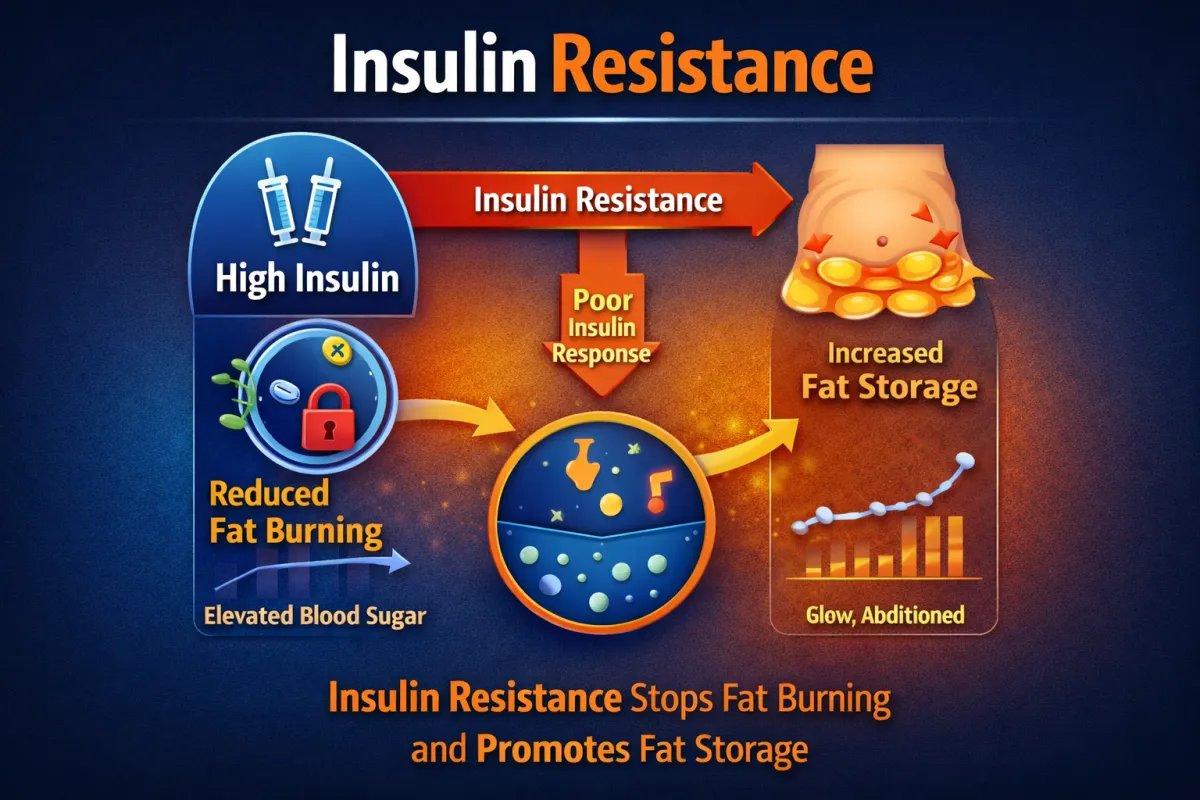
Insulin resistance occurs when your cells become less responsive to insulin.
As a result:
The body produces more insulin
Blood sugar becomes harder to control
Fat storage increases
Energy regulation becomes less stable
Over time, this can make fat loss significantly more difficult—even if you are eating less.
Why Insulin Resistance Affects Fat Loss
Insulin plays a major role in whether your body stores fat or burns it.
When insulin levels are elevated:
Fat burning is reduced
Fat storage is increased
The body becomes more dependent on glucose for energy
This is why many people feel stuck:
👉 They are trying to lose fat
👉 But their metabolism is being driven toward storage instead of burning
Common Signs of Insulin Resistance
Many people have insulin resistance without realizing it.
Common signs include:
Difficulty losing weight
Increased belly fat
Energy crashes after meals
Cravings for sugar or carbohydrates
Feeling hungry frequently
Brain fog or low energy
These symptoms are often mistaken for lack of discipline—but they are metabolic signals.
What Causes Insulin Resistance?
Several factors can contribute to insulin resistance:
1. Frequent Eating and High Sugar Intake
Constant insulin spikes can reduce the body’s sensitivity over time.
2. Lack of Muscle Mass
Muscle plays a key role in glucose regulation and insulin sensitivity.
3. Chronic Stress
Elevated cortisol can interfere with insulin function.
4. Poor Sleep
Sleep disruption affects hormonal balance and blood sugar control.
5. Sedentary Lifestyle
Movement helps regulate blood sugar and improve insulin sensitivity.
Insulin Resistance and the MOS Framework
Inside the Metabolic Operating System (MOS), insulin resistance is primarily connected to the Hormonal Signals switch.
When this switch becomes impaired:
The body shifts toward fat storage
Energy becomes unstable
Metabolic flexibility decreases
This often contributes to what we call metabolic protection mode, where fat loss slows or stops.
Can Insulin Resistance Be Reversed?
In many cases, insulin resistance can be improved.
This involves restoring the body’s ability to regulate blood sugar and respond properly to insulin.
Key strategies include:
Structuring meals to reduce blood sugar spikes
Supporting muscle development
Improving sleep and recovery
Managing stress levels
Improving metabolic flexibility
Evaluate Your Metabolic Health
Insulin resistance is only one part of the metabolic system.
To fully understand what’s affecting your fat loss and energy:
👉 Take the Metabolic Self Test
This helps identify which metabolic switches may be impaired and what steps to take next.
Conclusion
Insulin resistance is a key driver of fat storage, energy instability, and metabolic slowdown.
Understanding how insulin affects your body is critical for restoring fat-burning efficiency and improving overall metabolic health.
When addressed properly, the body can begin to shift back toward balanced energy and more effective fat loss.


