What Is Metabolic Damage (And Can It Be Reversed?)
What Is Metabolic Damage (And Can It Be Reversed?)
Introduction
The term “metabolic damage” is often used to describe a situation where fat loss becomes extremely difficult, energy levels are low, and the body no longer responds to dieting or exercise in the expected way.
Many people feel as though their metabolism is “broken.”
However, while the experience is real, the concept of permanent metabolic damage is often misunderstood.
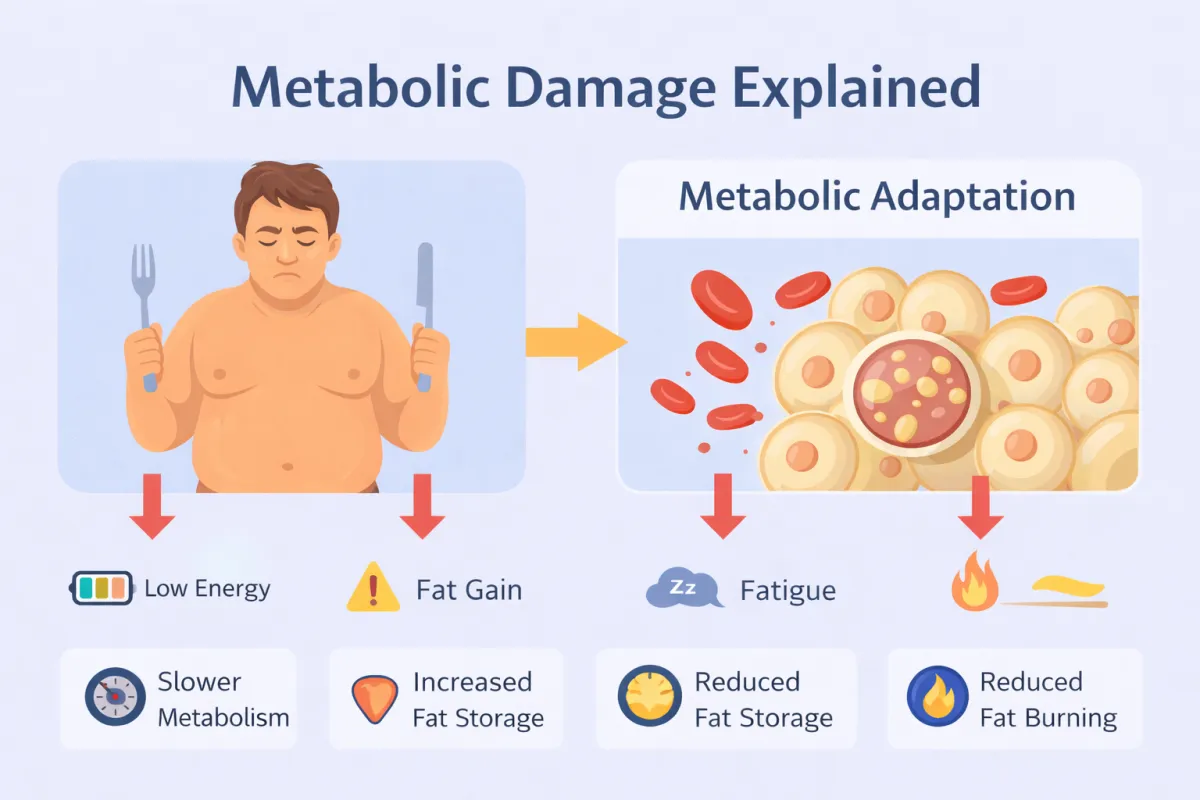
In most cases, the metabolism is not damaged, but rather adapted and dysregulated.
What People Mean by “Metabolic Damage”
When individuals refer to metabolic damage, they are typically describing a combination of symptoms such as:
difficulty losing weight despite dieting
persistent fatigue
increased fat storage, especially around the midsection
reduced metabolic rate
disrupted hunger and appetite signals
These symptoms often develop after long periods of:
calorie restriction
excessive exercise
chronic stress
poor sleep
Over time, the body adjusts to these conditions.
The Body’s Adaptive Response
The metabolism is designed to protect the body, not work against it.
When energy intake is consistently reduced, the body responds by conserving energy and becoming more efficient.
This adaptive response may include:
lowering energy expenditure
reducing fat oxidation
increasing hunger signals
prioritizing energy storage
Rather than being damaged, the metabolism is responding to perceived stress and energy scarcity.
Why the Term “Damage” Can Be Misleading
The idea that the metabolism is permanently damaged can lead to frustration and confusion.
In reality, metabolic function is highly dynamic.
The body is constantly adjusting based on:
energy intake
activity levels
hormonal signals
recovery and stress
What is often labeled as “damage” is more accurately a protective state that the body has entered.
Within the Metabolic Operating System framework, this is referred to as metabolic protection mode.
The MOS Perspective
From a Metabolic Operating System standpoint, metabolic dysfunction is not a single issue.
It reflects changes across multiple metabolic systems:
Fuel Utilization
Hormonal Signaling
Metabolic Flexibility
Recovery and Energy Regulation
When these systems become impaired, the body may shift toward energy conservation and reduced fat burning.
This can create the experience commonly described as metabolic damage.
Can the Metabolism Be Restored?
In most cases, metabolic function can be improved.
However, the process is not simply the opposite of dieting harder or exercising more.
Restoring metabolic function often involves addressing the systems that have been disrupted.
This may include:
improving fuel utilization
stabilizing hormonal signaling
increasing metabolic flexibility
supporting recovery and sleep
The goal is not to force fat loss, but to restore the conditions that allow fat loss to occur naturally.
Why More Restriction Often Makes It Worse
When fat loss stalls, the most common response is to increase restriction.
This can include:
further reducing calories
increasing exercise volume
eliminating additional food groups
While this may produce short-term results, it can reinforce the same metabolic adaptations that created the problem.
As a result, the cycle continues.
Evaluating Metabolic Function
Understanding which metabolic systems are contributing to reduced fat loss is an important step.
Rather than relying on guesswork, a structured assessment can help identify patterns related to:
energy levels
fat-burning capacity
hormonal regulation
recovery
The Metabolic Self Test is designed to provide insight into these areas.
👉 Take The Metabolic Self Test
Final Thoughts
The idea of metabolic damage reflects a real experience, but it is often misunderstood.
In most cases, the metabolism is not permanently broken.
It is adapting to prolonged stress, restriction, and energy imbalance.
By identifying and restoring key metabolic systems, it is possible to improve energy regulation, fat-burning capacity, and overall metabolic health.
Understanding how the metabolism adapts is the first step toward restoring how it functions.


