What Is Metabolic Flexibility (And Why It Matters for Fat Loss After 40)
What Is Metabolic Flexibility (And Why It Matters for Fat Loss After 40)
Introduction
If you feel like your body struggles to burn fat, your energy levels fluctuate throughout the day, or certain diets stop working over time, the issue may not be your effort—it may be your metabolism.
One of the most important but often overlooked aspects of metabolic health is something called metabolic flexibility.
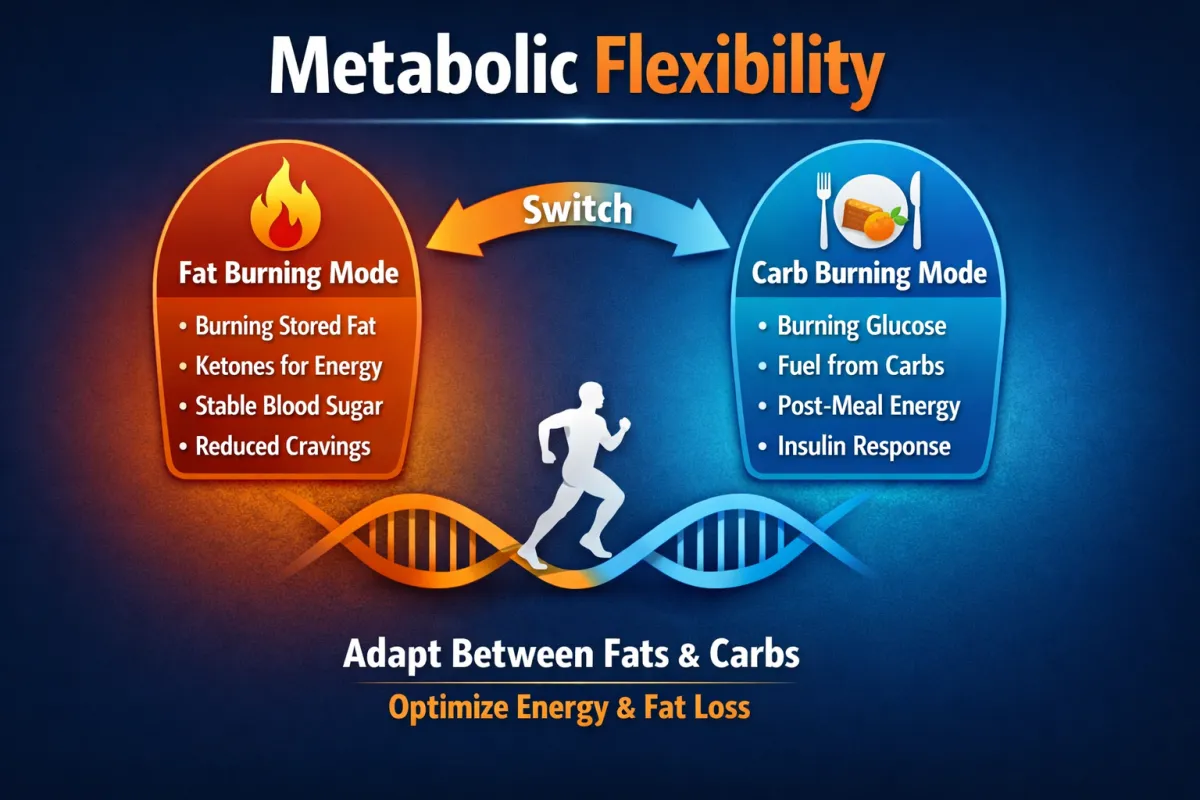
Metabolic flexibility refers to your body’s ability to switch between burning carbohydrates and burning fat for energy. When this system works properly, fat loss becomes more efficient and energy levels are more stable. When it becomes impaired, the body can struggle to access stored fat as fuel.
What Is Metabolic Flexibility?
Metabolic flexibility is the body’s ability to adapt to different energy demands.
For example:
After eating carbohydrates, your body should be able to use glucose for energy
Between meals or during lower insulin states, your body should shift to burning stored fat
A metabolically flexible body can move between these energy systems efficiently.
A metabolically inflexible body becomes “stuck,” often relying heavily on sugar and struggling to access fat as fuel.
Why Metabolic Flexibility Matters for Fat Loss
Fat loss is not just about eating fewer calories—it’s about whether your body can actually access stored fat for energy.
If metabolic flexibility is impaired:
The body becomes dependent on frequent food intake
Energy crashes may occur between meals
Fat burning becomes inefficient
Weight loss plateaus become more common
This is one of the key reasons why many people feel like their metabolism is “slow,” even when they are eating less.
What Causes Poor Metabolic Flexibility?
Several factors can impair metabolic flexibility over time:
1. Chronic High Insulin Levels
Frequent eating, high sugar intake, and insulin resistance can reduce the body’s ability to burn fat.
2. Repeated Dieting
Chronic calorie restriction can disrupt energy regulation and metabolic efficiency.
3. Lack of Movement or Resistance Training
Reduced muscle mass decreases the body’s ability to utilize glucose and burn fat.
4. Stress and Poor Recovery
High cortisol levels and poor sleep can interfere with metabolic regulation.
Metabolic Flexibility and the MOS Framework
Inside the Metabolic Operating System (MOS), metabolic flexibility is one of the four key metabolic switches:
Fuel Utilization
Hormonal Signals
Metabolic Flexibility
Recovery and Energy Regulation
When metabolic flexibility is impaired, the body may shift into a state where fat burning becomes less efficient and energy regulation becomes unstable.
This is often part of what we refer to as metabolic protection mode.
Signs Your Metabolic Flexibility May Be Impaired
You may have reduced metabolic flexibility if you experience:
Frequent hunger or cravings
Energy crashes between meals
Difficulty going longer periods without eating
Trouble losing fat despite dieting
Reliance on caffeine for energy
How to Improve Metabolic Flexibility
Improving metabolic flexibility involves restoring your body’s ability to use both carbohydrates and fat effectively.
This often includes:
Structuring meals to stabilize blood sugar
Supporting hormonal balance
Building or maintaining muscle mass
Improving sleep and recovery
Reducing chronic stress
Evaluate Your Metabolic Flexibility
Because metabolic flexibility is only one part of the metabolic system, it’s important to understand how all metabolic systems are functioning together.
👉 Take the Metabolic Self Test
This assessment helps identify which metabolic switches may be affecting your fat loss and energy levels.
Conclusion
Metabolic flexibility is a key factor in how your body regulates energy and burns fat.
When this system is working properly, fat loss becomes more efficient and energy levels remain stable. When it becomes impaired, the body may struggle to access stored fat and maintain metabolic balance.
Understanding and restoring metabolic flexibility is a critical step in rebuilding a healthy metabolism.


