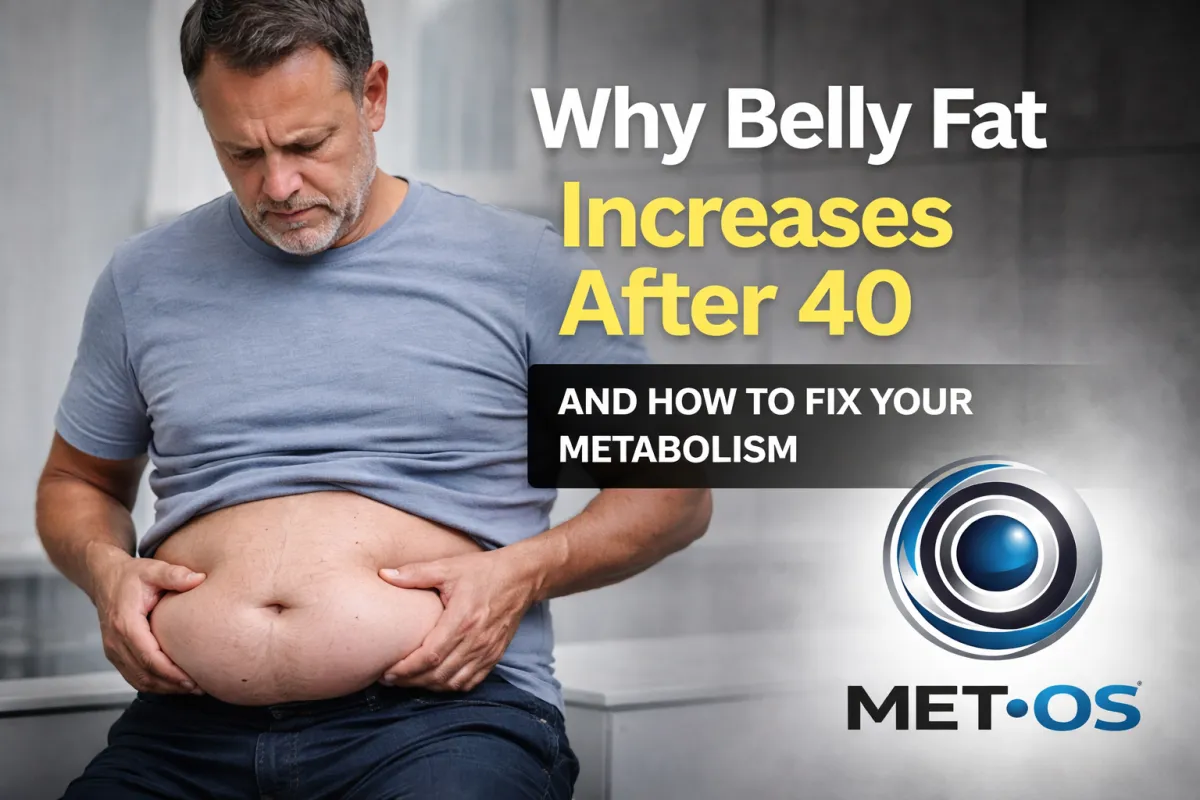
Why Belly Fat Increases After 40
Why Belly Fat Increases After 40
Introduction
Belly fat tends to increase with age.
Many men notice that what used to work no longer does.
Calories are lower.
Workouts are consistent.
Discipline is still there.
But the midsection keeps growing.
This is often blamed on aging.
However, the increase in belly fat after 40 is not simply an age-related issue.
It is largely driven by changes in how the body regulates metabolism, hormones, and energy.
What Changes After 40
As the body ages, several physiological systems begin to shift.
These changes can influence how energy is stored and used, including:
• reduced insulin sensitivity
• changes in hormone levels
• slower recovery capacity
• altered energy regulation
Individually, these changes are manageable.
But when combined, they can begin to influence fat storage patterns.
The Shift Toward Abdominal Fat Storage
One of the most noticeable changes is where fat is stored.
Instead of being distributed more evenly, the body begins to favor storage around the midsection.
This is influenced by:
• hormonal signaling changes
• increased stress load
• reduced metabolic flexibility
Abdominal fat is not random.
It is a reflection of how the body is managing energy under current conditions.
Hormonal Influence on Belly Fat
Hormones play a central role in fat distribution.
After 40, key hormones begin to shift, including:
• insulin
• testosterone
• cortisol
These changes can lead to:
• increased fat storage in the abdominal area
• reduced fat-burning efficiency
• altered appetite and energy regulation
When hormonal signaling becomes less efficient, the body may prioritize fat storage over fat utilization.
Insulin and Fat Storage
Insulin is responsible for managing blood sugar levels.
Over time, repeated elevations in blood sugar can lead to reduced insulin sensitivity.
This may result in:
• higher circulating insulin levels
• increased fat storage
• reduced access to stored fat for energy
The abdominal region is particularly sensitive to these changes.
Stress and Central Fat Gain
Stress levels often increase with age due to work, family, and lifestyle demands.
Chronic stress can influence fat storage through cortisol.
Elevated cortisol levels are associated with:
• increased abdominal fat storage
• changes in fat distribution
• reduced metabolic efficiency
This is one reason belly fat is commonly linked to high-stress lifestyles.
Loss of Metabolic Flexibility
A healthy metabolism can switch between fuel sources.
This is known as metabolic flexibility.
After 40, this flexibility can decline.
When this happens:
• the body relies more on glucose
• fat-burning capacity decreases
• energy becomes less stable
This can contribute to gradual fat accumulation, especially in the midsection.
The Effects of Reduced Recovery
Recovery plays a major role in metabolic health.
With age, recovery capacity may decline due to:
• poorer sleep quality
• higher stress levels
• increased training demands
When recovery is impaired:
• energy production decreases
• hormonal balance is affected
• fat loss becomes more difficult
This can further reinforce fat storage patterns.
The MOS Perspective
Within the Metabolic Operating System (MOS), belly fat is not viewed as a surface-level issue.
It is a signal.
It reflects dysfunction across multiple metabolic systems:
• Fuel Utilization
• Hormonal Signaling
• Metabolic Flexibility
• Recovery and Energy
When these systems are impaired, the body may enter metabolic protection mode.
In this state:
• fat storage increases
• energy output decreases
• fat loss becomes resistant
Belly fat is often one of the most visible signs of this state.
Why More Effort Can Backfire
When belly fat increases, the common response is to increase effort.
This often includes:
• stricter dieting
• more frequent workouts
• aggressive calorie reduction
However, these approaches can place additional stress on the system.
This may:
• elevate cortisol
• reduce recovery
• worsen hormonal imbalance
In many cases, this reinforces the exact conditions that promote belly fat storage.
Supporting a Healthier Metabolic State
Addressing belly fat requires a systems-based approach.
Rather than focusing only on calories, it is important to support:
• stable energy intake
• balanced hormonal signaling
• improved recovery
• consistent daily patterns
When these systems begin to stabilize, fat storage patterns can change.
Evaluating Metabolic Function
Understanding why belly fat is increasing requires more than guesswork.
A structured assessment can help identify:
• energy stability
• hunger patterns
• recovery capacity
• fat storage tendencies
The Metabolic Self Test is designed to evaluate these areas.
👉 Take The Metabolic Self Test
Final Thoughts
Belly fat after 40 is not simply a result of aging.
It is a reflection of how the body is managing energy, hormones, and recovery.
When these systems become impaired, the body may shift toward fat storage, particularly in the abdominal area.
By understanding these underlying mechanisms, it becomes possible to address the root causes rather than just the symptoms.
Fat loss is not about working harder.
It is about restoring the system that controls it.


