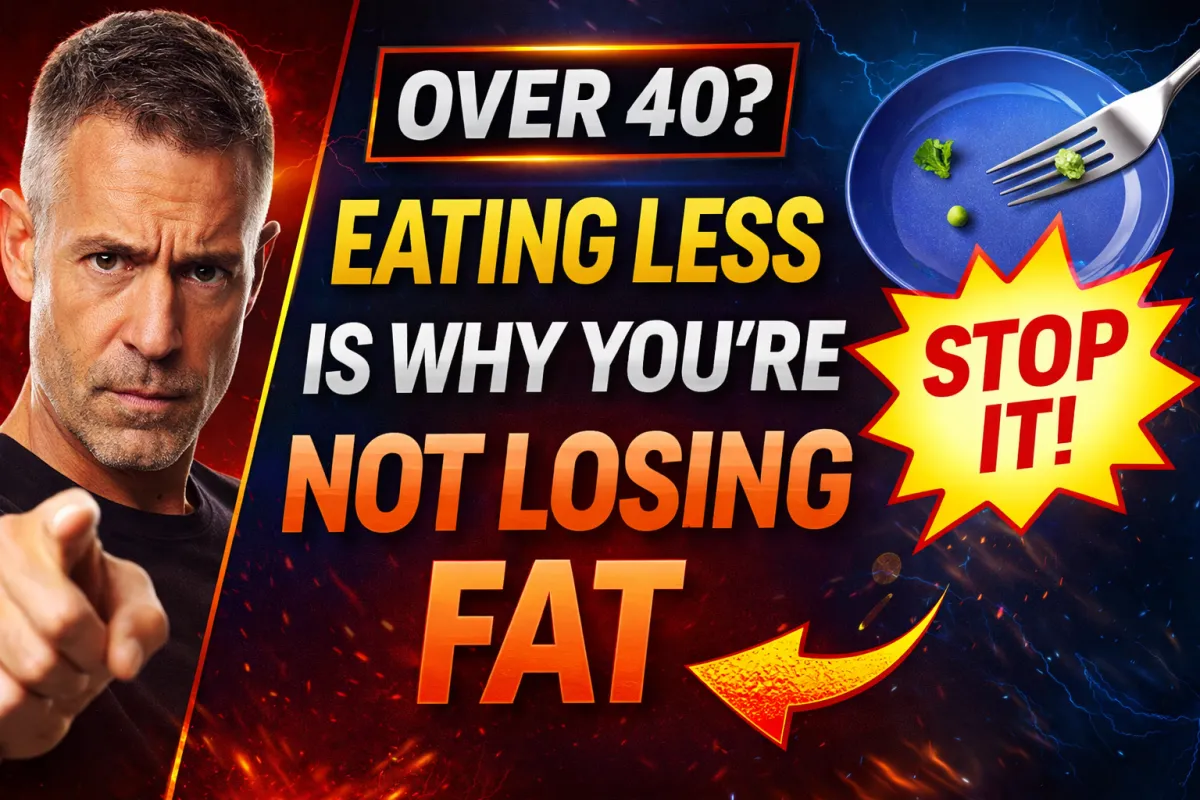
Why Eating Less Doesn’t Work After 40 (And What to Do Instead)
Why Doesn’t Eating Less Lead to Fat Loss After 40?
Eating less stops working because your metabolism adapts to reduced energy intake over time, becoming more efficient, conserving energy, and resisting further fat loss.
Is Eating Less Slowing Down Your Metabolism?
Yes, especially when done repeatedly or aggressively, as it signals to the body that energy is limited, which can reduce metabolic output and increase hunger.
What Should You Do Instead of Eating Less?
Instead of restricting more, the focus should shift toward restoring metabolic stability through consistent nutrition, structured meals, and improved energy signaling.
Introduction
If you’ve been told that fat loss is simply a matter of eating less, you are not alone.
For years, this has been the dominant message in the fitness and weight loss industry, and while it may produce short-term results, it often fails over time—especially for men over 40.
At some point, what used to work stops working.
You reduce your food intake, increase your effort, and expect progress, but instead you find yourself feeling more tired, more hungry, and less responsive.
This is not a failure of discipline.
It is a predictable response from your metabolism.
The “Eat Less” Model Only Works Short Term
In the beginning, reducing food intake often leads to fat loss because your body is forced to use stored energy.
However, the body is not designed to continue losing energy indefinitely.
It is designed to survive.
As your intake decreases, your body begins to adjust.
Energy output is reduced, hunger signals increase, and efficiency improves, all in an effort to preserve balance.
This is not a flaw.
It is a survival mechanism.
What Happens Inside Your Body When You Eat Less
When you consistently reduce your food intake, your body does not simply continue burning more fat.
Instead, it begins to shift into a more protective state.
Metabolic output decreases, meaning you burn fewer calories at rest and during activity.
Hormonal signals begin to change, with hunger increasing and satiety becoming less effective.
Energy levels often drop, making it harder to train, focus, and recover.
Over time, these changes compound, making fat loss more difficult despite increased effort.
👉 “What Is Metabolic Protection Mode (And How to Fix It)”
Why This Becomes More Pronounced After 40
As you get older, your metabolism becomes more sensitive to stress and inconsistency.
Years of dieting, irregular eating patterns, poor sleep, and high stress begin to accumulate, creating an environment where your body is less willing to take risks with energy.
When you reduce your intake in this state, your body interprets it as another stress signal.
Instead of accelerating fat loss, it becomes more conservative.
👉 “Why Your Metabolism Slows Down After 40 (And How to Fix It)”
The Hidden Cost of Chronic Undereating
One of the biggest problems with eating less is not just the lack of results, but the side effects that come with it.
Chronic undereating often leads to:
lower energy throughout the day
increased cravings and hunger
reduced training performance
slower recovery
greater reliance on caffeine
These are not random symptoms.
They are signals that your metabolism is under pressure.
👉 “Signs Your Metabolism Is in Protection Mode”
Why More Restriction Makes the Problem Worse
The natural response when fat loss slows down is to push harder.
Eat less. Cut more. Add more cardio.
But when your metabolism is already in a protective state, this approach reinforces the problem.
Each additional layer of restriction sends a stronger signal that energy is scarce.
Your body responds by conserving even more.
This is why many people feel stuck in a cycle where they are doing more, but getting less in return.
Fat Loss Is Not About Forcing the Body
Fat loss is often framed as something that must be forced through discipline and restriction.
But in reality, fat loss is a response.
It occurs when your body feels safe enough to release stored energy.
If your metabolism perceives stress, instability, or scarcity, it will hold onto energy instead.
This is why effort alone is not enough.
The environment matters.
What Your Body Actually Needs Instead
Instead of focusing on reducing intake, the focus should shift toward restoring stability.
Your body needs consistent signals that energy is available and reliable.
This includes structured meal timing, adequate intake, and a balance of nutrients that support steady energy.
Inside the Metabolic Operating System, this is where the 4x4 structure becomes foundational.
Four meals per day, spaced evenly, create a predictable pattern that reduces stress and stabilizes metabolic function.
👉 “How the 4x4 Meal Structure Restores Metabolic Stability”
From Restriction to Responsiveness
The goal is not to eat more or less.
The goal is to become more responsive.
When your metabolism is stable, your body can adjust naturally.
It can use stored energy when needed and maintain energy when required.
This flexibility is what allows fat loss to happen consistently instead of unpredictably.
Why This Changes Everything
When you understand that eating less is not always the answer, your entire approach shifts.
Instead of constantly trying to reduce, you begin to focus on improving the signals your body receives.
This creates a more sustainable and effective path forward.
Fat loss becomes a byproduct of stability, not a constant battle against your own body.
Final Thoughts
Eating less is not the problem.
But relying on it as the primary strategy is.
Your metabolism is not broken.
It is adapting to the signals you have given it over time.
When you change those signals, your results begin to change as well.
Next Step
If you feel like you’ve been doing everything right but nothing is working:
👉 Take the Metabolic Self-Test
This will show you exactly what’s happening inside your metabolism and what needs to be restored first.


