Why Stress and Cortisol Can Cause Weight Gain
Why Stress and Cortisol Can Cause Weight Gain
Introduction
Stress is a normal part of life.
However, when stress becomes chronic, it can begin to influence how the body regulates energy, stores fat, and responds to food intake.
One of the primary hormones involved in this process is cortisol.
While cortisol plays an important role in short-term survival, prolonged elevations can disrupt metabolic balance and contribute to weight gain.
What Cortisol Does
Cortisol is a hormone released by the adrenal glands in response to physical or psychological stress.
Its primary function is to help the body respond to increased demands by:
increasing energy availability
mobilizing stored fuel
supporting alertness and focus
In short-term situations, this response is beneficial.
However, when cortisol remains elevated for extended periods, the effects on metabolism can change.
The Effects of Chronic Stress
When stress becomes ongoing, the body may remain in a heightened state of alertness.
This can influence multiple metabolic systems and lead to:
disrupted energy regulation
increased appetite
changes in fat storage patterns
reduced recovery capacity
Over time, these changes can make it more difficult to maintain a healthy body composition.
Cortisol and Fat Storage
One of the key ways cortisol affects metabolism is through its influence on fat storage.
Elevated cortisol levels are associated with:
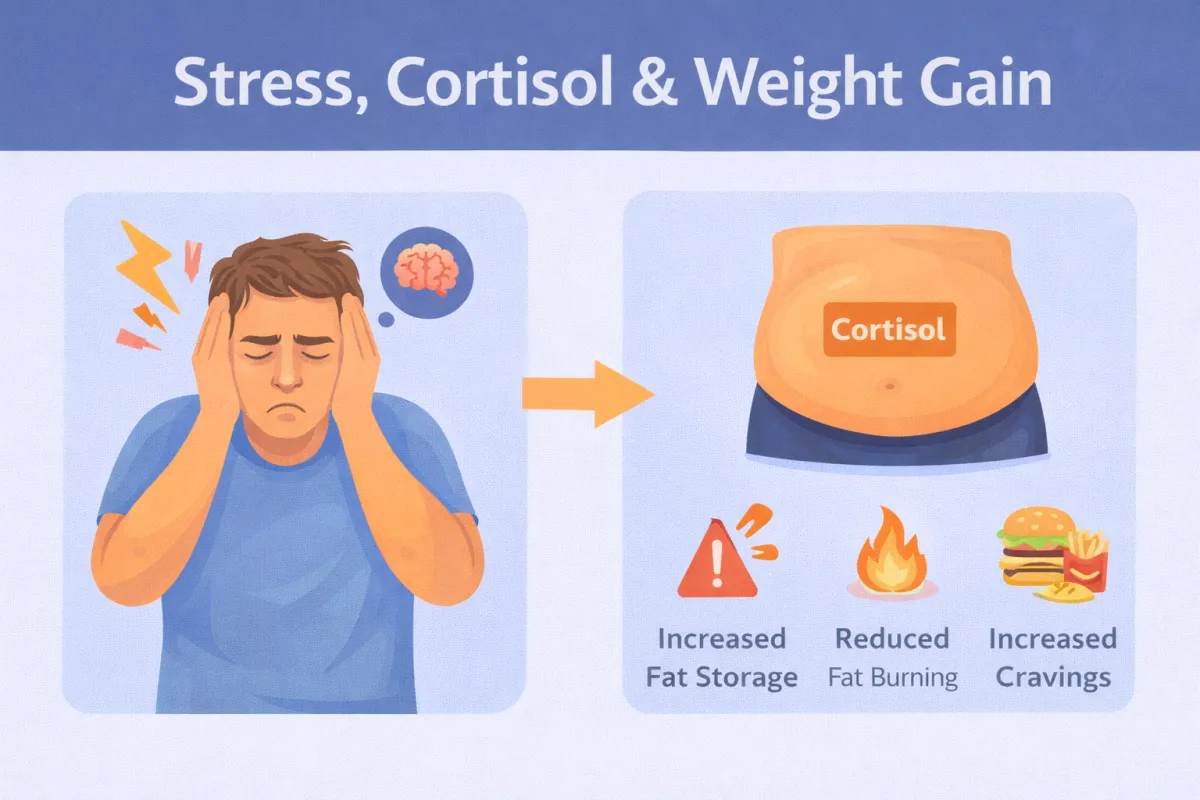
increased fat storage, particularly around the midsection
changes in how the body distributes fat
reduced fat-burning efficiency
This is one reason why chronic stress is often linked to increased abdominal fat.
Cortisol and Blood Sugar Regulation
Cortisol also interacts with blood sugar regulation.
It can increase glucose availability in the bloodstream to provide immediate energy.
When this occurs frequently, it may contribute to:
elevated insulin levels
increased fat storage
reduced metabolic flexibility
Over time, this interaction can influence how the body processes carbohydrates and stores energy.
Cortisol and Appetite
Chronic stress can also affect appetite regulation.
Some individuals may experience reduced appetite during acute stress.
However, prolonged stress is often associated with:
increased cravings, particularly for high-energy foods
changes in hunger signals
difficulty regulating food intake
This can further contribute to weight gain over time.
The MOS Perspective
Within the Metabolic Operating System framework, cortisol is part of the Hormonal Signaling system.
It also interacts closely with:
Recovery and Energy Regulation
Fuel Utilization
Metabolic Flexibility
When cortisol remains elevated, it can influence how these systems function together.
This may contribute to a state of metabolic protection mode, where the body prioritizes energy conservation and fat storage.
Why More Effort Can Backfire
When weight gain occurs, the typical response is to increase effort through:
stricter dieting
more intense exercise
reduced calorie intake
However, these approaches can sometimes increase stress on the body.
This may further elevate cortisol levels and reinforce the same metabolic patterns contributing to weight gain.
Supporting a Balanced Stress Response
Improving how the body responds to stress is not about eliminating stress entirely.
Instead, it involves supporting the systems that regulate recovery and energy balance.
This may include:
improving sleep quality
managing daily stressors
allowing for adequate recovery
maintaining consistent routines
When these factors are addressed, cortisol levels may become more stable.
Evaluating Stress and Metabolic Function
Understanding how stress is affecting metabolic function can help identify potential barriers to fat loss.
A structured assessment can provide insight into:
energy patterns
recovery capacity
hunger and appetite signals
fat storage tendencies
The Metabolic Self Test is designed to evaluate these patterns.
👉 Take The Metabolic Self Test
Final Thoughts
Cortisol plays an important role in helping the body respond to stress.
However, when stress becomes chronic, elevated cortisol levels can influence fat storage, appetite, and energy regulation.
This can contribute to weight gain and make fat loss more difficult.
By understanding how stress and hormonal signaling interact, it becomes possible to address the underlying factors that influence metabolic health.


