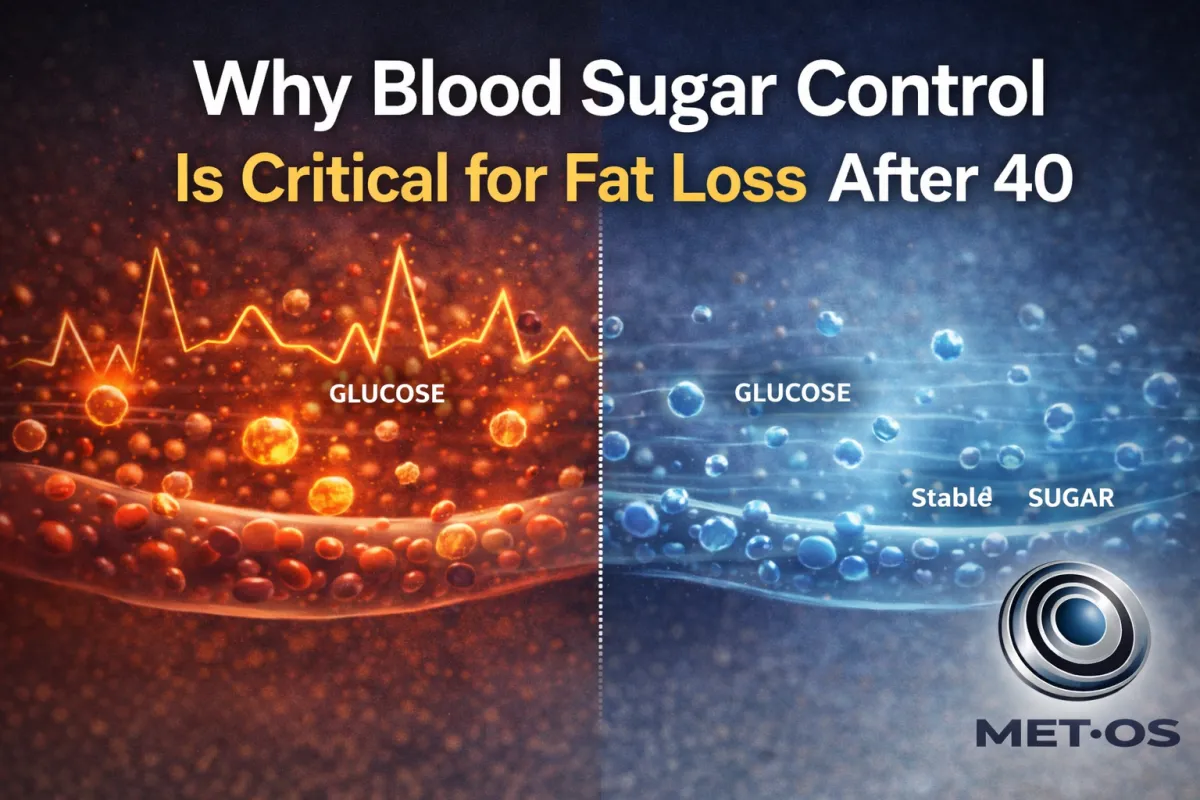
Why Blood Sugar Control Is Critical for Fat Loss After 40
Why Blood Sugar Control Is Critical for Fat Loss After 40
Introduction
If fat loss feels inconsistent or unpredictable, blood sugar control is often the missing piece.
Most people think fat loss is about eating less.
But in reality, it is about how your body manages energy.
Blood sugar plays a central role in this process.
When blood sugar is stable, your metabolism functions efficiently.
When it is unstable, fat loss becomes difficult.
What Is Blood Sugar and Why It Matters
Blood sugar refers to the amount of glucose circulating in your bloodstream.
Your body uses this glucose for energy.
However, blood sugar is not just about energy. It directly affects hormones, hunger, fat storage, and metabolic function.
When blood sugar rises too quickly or drops too low, your body is forced to compensate.
This creates instability inside the system.
How Blood Sugar Affects Fat Loss
When blood sugar spikes, insulin rises to bring it back down.
If this happens too frequently, insulin stays elevated.
As we discussed in:
👉 “What Is Insulin Resistance (And Why It Matters)”
elevated insulin suppresses fat burning.
At the same time, blood sugar crashes lead to:
increased hunger
cravings for quick energy
reduced energy levels
This creates a cycle where your body is constantly chasing stability instead of burning fat.
Why Blood Sugar Becomes Unstable After 40
As you get older, your body becomes less efficient at managing glucose.
This is often due to:
inconsistent meal timing
increased stress
reduced sleep quality
declining insulin sensitivity
These factors disrupt the natural rhythm of your metabolism.
This is also why fat loss after 40 feels more difficult.
👉 “Why Your Metabolism Slows Down After 40”
The Connection Between Blood Sugar and Hormones
Blood sugar instability does not just affect energy. It affects hormones as well.
When blood sugar fluctuates:
cortisol increases to stabilize energy
insulin rises more frequently
testosterone signaling becomes less effective
This creates a hormonal environment that promotes fat storage instead of fat burning.
👉 “How Hormones Affect Fat Loss in Men Over 40”
How Blood Sugar Instability Shows Up
Many people experience blood sugar issues without realizing it.
Common signs include:
You may feel hungry shortly after eating.
Your energy may rise and fall throughout the day.
You may crave sugar or carbs in the afternoon or evening.
You may feel better immediately after eating, but worse shortly after.
These are all signs that your metabolism is not maintaining stable energy.
Why Eating Less Makes This Worse
When you reduce calories aggressively, blood sugar becomes more unstable.
Your body is forced into a reactive state.
This leads to:
increased stress hormones
greater energy fluctuations
more frequent cravings
As explained in
👉 “Why Eating Less Doesn’t Always Lead to Fat Loss”
this approach often makes fat loss harder over time.
How to Stabilize Blood Sugar (The Right Way)
The goal is not restriction. The goal is stability.
This begins with:
consistent meal timing
structured meals
balanced energy intake
reducing metabolic stress
Inside the Metabolic Operating System, this is why we use structured eating patterns.
These patterns help stabilize blood sugar and restore proper metabolic signaling.
Why This Matters for Fat Loss
Fat loss does not happen when your body is unstable.
It happens when your metabolism feels safe and predictable.
When blood sugar stabilizes:
insulin improves
hunger decreases
energy becomes consistent
fat burning becomes more efficient
This is when fat loss starts to feel easier.
Final Thoughts
Blood sugar control is not just a nutrition concept.
It is a metabolic signal.
If your blood sugar is unstable, your metabolism will not function properly.
When you restore stability, your body can begin to work the way it was designed to.
Next Step
If you want to understand how your metabolism is functioning:
👉 Take the Metabolic Self-Test
It will show you which signals are off and what to do next.


