How Hormones Affect Fat Loss in Men Over 40 (And Why It Matters)
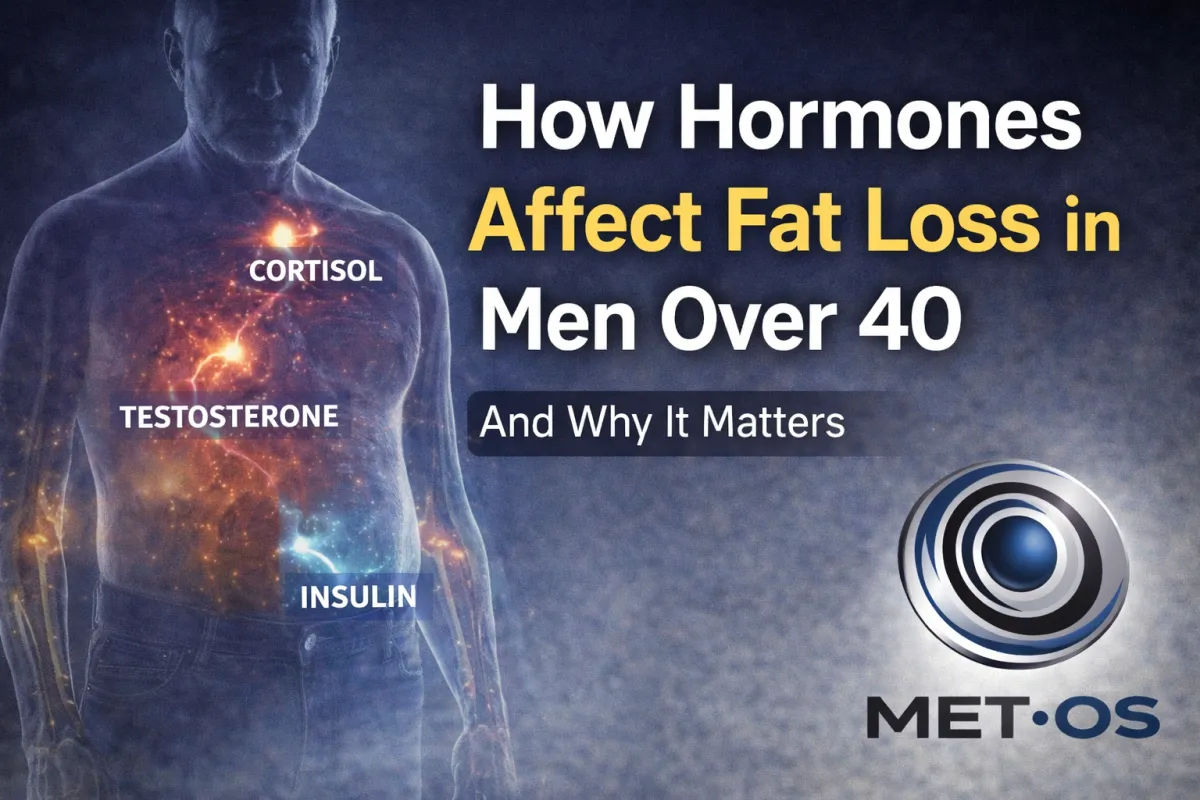
How Hormones Affect Fat Loss in Men Over 40 (And Why It Matters)
Introduction
If fat loss feels harder after 40, most people assume it’s because of age.
That’s not the real reason.
The real issue is hormonal signaling.
Your metabolism is not just driven by how much you eat. It is controlled by signals that tell your body when to burn fat and when to store it.
When those signals are working properly, fat loss feels natural.
When they are not, fat loss becomes a constant struggle.
What Hormones Actually Do for Fat Loss
Hormones act as messengers inside your body.
They control how your metabolism behaves. They influence energy levels, hunger, fat storage, and fat burning.
This means fat loss is not just about calories. It is about how your body responds to those calories.
The three most important hormones involved are insulin, cortisol, and testosterone.
When these are balanced, your metabolism works efficiently.
When they are not, everything slows down.
Why Hormones Become a Problem After 40
As you get older, your body becomes more sensitive to stress and disruption.
Sleep often declines. Stress tends to increase. Eating patterns become less consistent.
These changes may seem small, but they have a major impact on hormonal signaling.
Over time, this creates a system that no longer responds properly to fat loss efforts.
If you have not read this yet, it will help connect the bigger picture:
👉 Why Your Metabolism Slows Down After 40
Insulin: The Fat Storage Signal
Insulin determines whether your body stores fat or burns it.
When insulin is elevated too frequently, fat burning becomes suppressed.
Your body shifts toward storage instead of usage.
This often leads to increased hunger, more frequent cravings, and reduced fat loss.
Over time, this can develop into insulin resistance, which makes fat loss even more difficult.
Cortisol: The Stress Response
Cortisol is your body’s primary stress hormone.
In short bursts, it is helpful. It gives you energy and helps you respond to challenges.
However, when cortisol remains elevated for long periods, it begins to disrupt your metabolism.
This leads to increased belly fat, lower energy, and slower recovery.
High cortisol is one of the main drivers of metabolic slowdown.
It also plays a key role in what we call Metabolic Protection Mode.
👉 What Is Metabolic Protection Mode?
Testosterone: The Metabolic Driver
Testosterone plays a major role in fat loss, muscle maintenance, and overall metabolic function.
As testosterone declines, your body becomes less efficient at burning fat.
Muscle mass may decrease. Energy levels drop. Fat storage increases.
This is one of the main reasons why belly fat becomes more noticeable after 40.
👉 Why Belly Fat Increases After 40
How Hormonal Imbalance Blocks Fat Loss
When insulin, cortisol, and testosterone are not aligned, your metabolism stops responding properly.
Fat burning signals decrease. Fat storage signals increase.
Even if you are doing everything “right,” results begin to stall.
This is where many men experience fat loss plateaus.
👉 What Causes Fat Loss Plateaus?
Why Dieting Often Makes This Worse
Most fat loss strategies focus on eating less and doing more.
At first, this may work.
But over time, it creates more stress on the system.
Cortisol increases. Hormonal balance becomes more disrupted. The metabolism adapts.
This is why fat loss eventually slows or stops.
👉 Why Eating Less Doesn’t Always Lead to Fat Loss
What Actually Improves Hormonal Function
Hormones do not improve through restriction.
They improve through stability.
Inside the Metabolic Operating System, the focus is on restoring consistent signals.
This includes structured meals, stable energy intake, proper recovery, and reduced stress.
When these signals improve, hormonal communication begins to normalize.
That is when fat loss starts working again.
Signs Your Hormones Are Affecting Fat Loss
You may notice persistent fatigue, even after sleeping.
You may feel hungry shortly after eating.
Belly fat may increase despite effort.
Fat loss may slow down or stop completely.
These are not signs of failure.
They are signals that your metabolism is not functioning properly.
Your Next Step
If your hormones are out of balance, pushing harder will not fix the problem.
It will usually make it worse.
The solution is to understand what your body is actually doing.
👉 Take The Metabolic Self Test
This will show you which metabolic signals are disrupted and what to do next.
👉 Take The Metabolic Self Test
Final Thought
Fat loss is not controlled by willpower.
It is controlled by signals.
When those signals are aligned, fat loss becomes natural.
When they are not, it feels impossible.
Trevor Folgering
Metabolic Health Specialist For Men Over 40