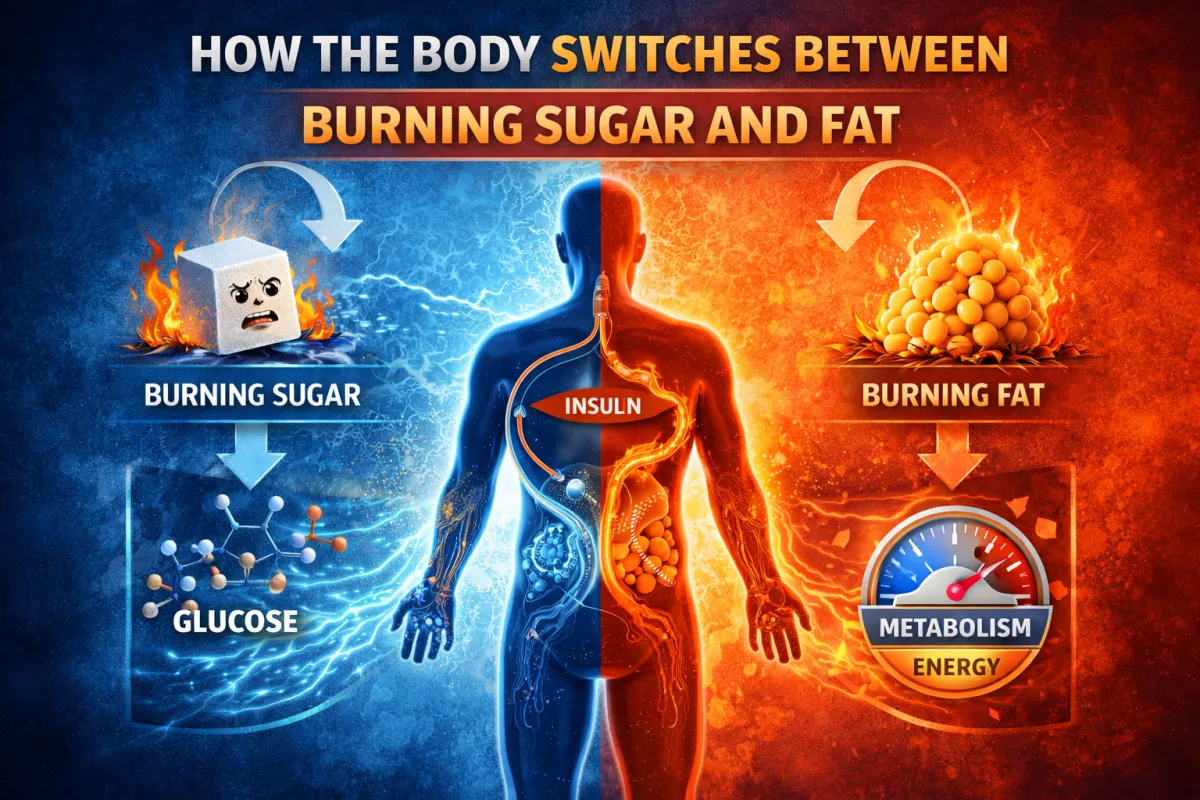
How the Body Switches Between Burning Sugar and Fat
How the Body Switches Between Burning Sugar and Fat
What does it mean when your body can't burn fat?
When your body cannot burn fat efficiently, it means it is relying too heavily on sugar for energy. This is often caused by elevated insulin levels, unstable blood sugar, and poor metabolic signaling. As a result, fat loss becomes difficult even with dieting or exercise.
Introduction
Your body is designed to use two primary sources of energy.
Sugar and fat.
The ability to switch between these two fuel sources is one of the most important functions of a healthy metabolism.
But for many men over 40, this system no longer works properly.
And when that happens, fat loss becomes difficult.
The Problem
Most people are constantly relying on sugar for energy.
They eat frequently, experience energy dips, and depend on food to maintain energy levels.
Over time, the body becomes less efficient at using fat as fuel.
This creates a state where the body is always looking for incoming energy instead of using stored energy.
What Fuel Switching Means
Fuel switching refers to the body’s ability to alternate between burning glucose and burning fat.
After eating, the body primarily uses glucose.
Between meals, it should shift toward using fat.
This transition is natural and necessary.
However, this system only works when metabolic signals are functioning properly.
How the Process Works
When you eat, blood sugar rises.
Insulin is released to move glucose into the cells.
During this time, the body uses glucose for energy.
Several hours later, as blood sugar decreases, insulin levels drop.
This signals the body to begin using stored fat as fuel.
This is the point where fat burning occurs.
Why This System Breaks Down
For many people, this transition never fully happens.
Blood sugar remains unstable.
Insulin remains elevated.
The body never shifts into fat-burning mode.
Instead, the body becomes dependent on constant food intake.
This leads to:
Frequent hunger
Energy crashes
Reduced fat burning
👉 Related: Why Blood Sugar Control Is Critical for Fat Loss
The Role of Insulin
Insulin plays a central role in fuel switching.
When insulin is elevated, fat burning is reduced.
When insulin decreases, fat burning increases.
If insulin remains elevated too often, the body cannot efficiently access stored fat.
👉 Related: The Connection Between Insulin and Fat Storage
What Happens Over Time
When the body loses the ability to switch between fuels, it becomes metabolically inflexible.
This leads to:
Increased fat storage
Reduced energy efficiency
Greater dependence on frequent eating
Fat loss becomes difficult because the body is not accessing stored energy.
Key Concepts
The body should alternate between sugar and fat as fuel.
Insulin regulates this process.
Frequent eating and unstable blood sugar disrupt fuel switching.
Metabolic flexibility is required for effective fat loss.
Practical Insight
Restoring fuel switching is not about extreme diets.
It is about creating stability.
This includes:
Consistent meal timing
Balanced meals
Reducing unnecessary snacking
Allowing time between meals
These factors help the body relearn how to use stored fat as fuel.
The MOS Perspective
Within the Metabolic Operating System, this is part of Fuel Utilization (Switch 1).
When this system is functioning properly, energy becomes more stable and fat loss becomes more efficient.
When it is not functioning properly, the body remains dependent on incoming fuel and fat loss slows down.
Your Next Steps
If you struggle with energy dips, constant hunger, or slow fat loss…
your body may not be switching fuels properly.
👉 Take the Metabolic Self Test
It will show you exactly what is happening inside your metabolism.
Final Thoughts
Fat loss is not just about eating less.
It is about whether your body can access stored energy.
When the body can switch between sugar and fat effectively, fat loss becomes easier.
When it cannot, fat loss becomes difficult regardless of effort.


