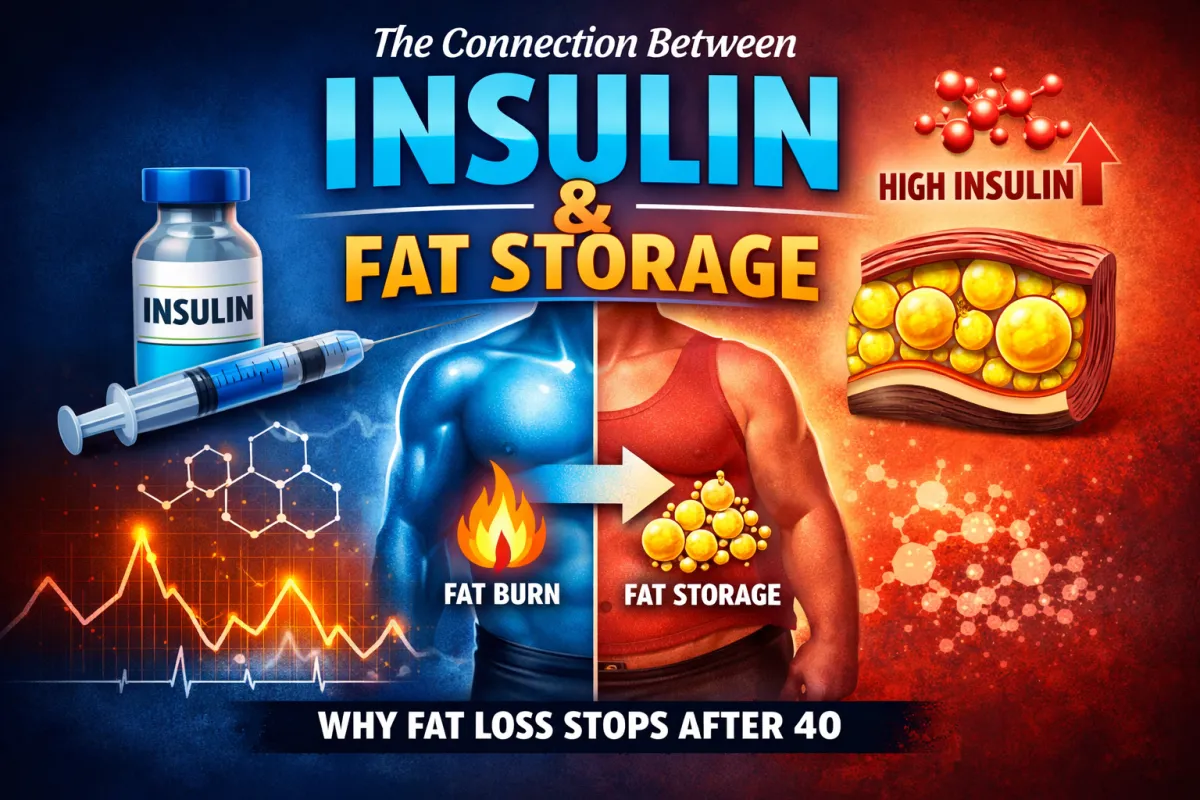
The Connection Between Insulin and Fat Storage
The Connection Between Insulin and Fat Storage
Introduction
If fat loss feels difficult or inconsistent, insulin is often the missing piece.
Most people think fat storage is simply a result of eating too much.
But fat storage is not just about calories. It is controlled by hormones.
Insulin is one of the most important hormones that determines whether your body stores fat or burns it.
Understanding how insulin works is essential if you want to understand why fat loss may not be happening.
The Problem
Many men over 40 are eating less, training harder, and still not losing fat.
This creates frustration, confusion, and often leads to even more restriction.
But the issue is not effort.
The issue is that the body is not receiving the right signals to release stored energy.
When insulin is elevated or not functioning properly, fat burning becomes significantly reduced.
What Insulin Does
Insulin is a hormone released when you eat, especially when carbohydrates are consumed.
Its role is to move glucose from the bloodstream into the cells where it can be used for energy.
When insulin is working properly, this process is smooth and efficient.
Energy is delivered where it needs to go, and the body can switch between using glucose and fat as fuel.
However, when insulin levels remain elevated for long periods of time, this balance begins to shift.
How Insulin Affects Fat Storage
Insulin does more than regulate blood sugar.
It also directly influences fat storage.
When insulin is elevated:
The body prioritizes storing energy rather than burning it.
Fat burning becomes suppressed.
The body becomes more dependent on incoming fuel instead of stored fat.
This is why even small increases in insulin over time can lead to increased fat storage.
And this is especially true in the abdominal area.
The Role of Insulin Resistance
Over time, the body can become less responsive to insulin.
This is known as insulin resistance.
When this happens, the body produces even more insulin to try to manage blood sugar levels.
This creates a cycle:
Higher insulin → more fat storage → less fat burning → more insulin required
This is one of the primary reasons fat loss becomes more difficult after 40.
👉 Related: What Is Insulin Resistance (And Why It Matters)
How This Connects to Blood Sugar
Insulin and blood sugar are closely connected.
When blood sugar is unstable, insulin must work harder and more frequently.
This leads to:
Frequent insulin spikes
Reduced fat-burning efficiency
Increased hunger and cravings
👉 Related: Why Blood Sugar Control Is Critical for Fat Loss
When this pattern continues, the metabolism becomes less stable and more protective.
Key Concepts
Insulin is not the enemy, but it must be regulated properly.
Elevated insulin reduces the body’s ability to burn fat.
Insulin resistance makes fat loss more difficult over time.
Stable blood sugar supports better insulin function.
Fat storage is hormonally controlled, not just calorie-driven.
Practical Insight
Improving insulin function is not about eliminating food or following extreme diets.
It is about restoring stability.
This includes:
Consistent meal timing
Balanced meals
Reducing large blood sugar spikes
Managing stress and recovery
These factors help bring insulin levels into a more stable and functional range.
The MOS Perspective
Within the Metabolic Operating System, insulin is part of the Fuel Utilization and Hormonal Signaling systems.
It also interacts with:
Recovery and Energy
Metabolic Flexibility
When insulin is not functioning properly, the entire system becomes less efficient.
This can lead to what we call metabolic protection mode, where the body prioritizes storing energy over releasing it.
Why More Effort Can Backfire
When fat loss stalls, the typical response is to increase effort.
People eat less and train more.
However, this often increases stress on the body and further disrupts insulin regulation.
This creates more instability, not less.
👉 Related: Why Eating Less Doesn’t Always Lead to Fat Loss
Your Next Steps
Understanding how insulin is affecting your metabolism is a critical first step.
👉 Take the Metabolic Self Test
It will help you identify which metabolic signals are not functioning properly and what to do next.
Final Thoughts
Fat storage is not simply about how much you eat.
It is about how your body processes and stores energy.
Insulin plays a central role in this process.
When insulin is functioning properly, fat loss becomes easier.
When it is not, fat loss becomes difficult regardless of effort.
By understanding how insulin influences metabolism, you can begin to address the underlying causes of fat storage.


