What Is Metabolic Flexibility (And Why It Matters for Fat Loss After 40)
What Is Metabolic Flexibility (And Why It Matters for Fat Loss After 40)
What Is Metabolic Flexibility?
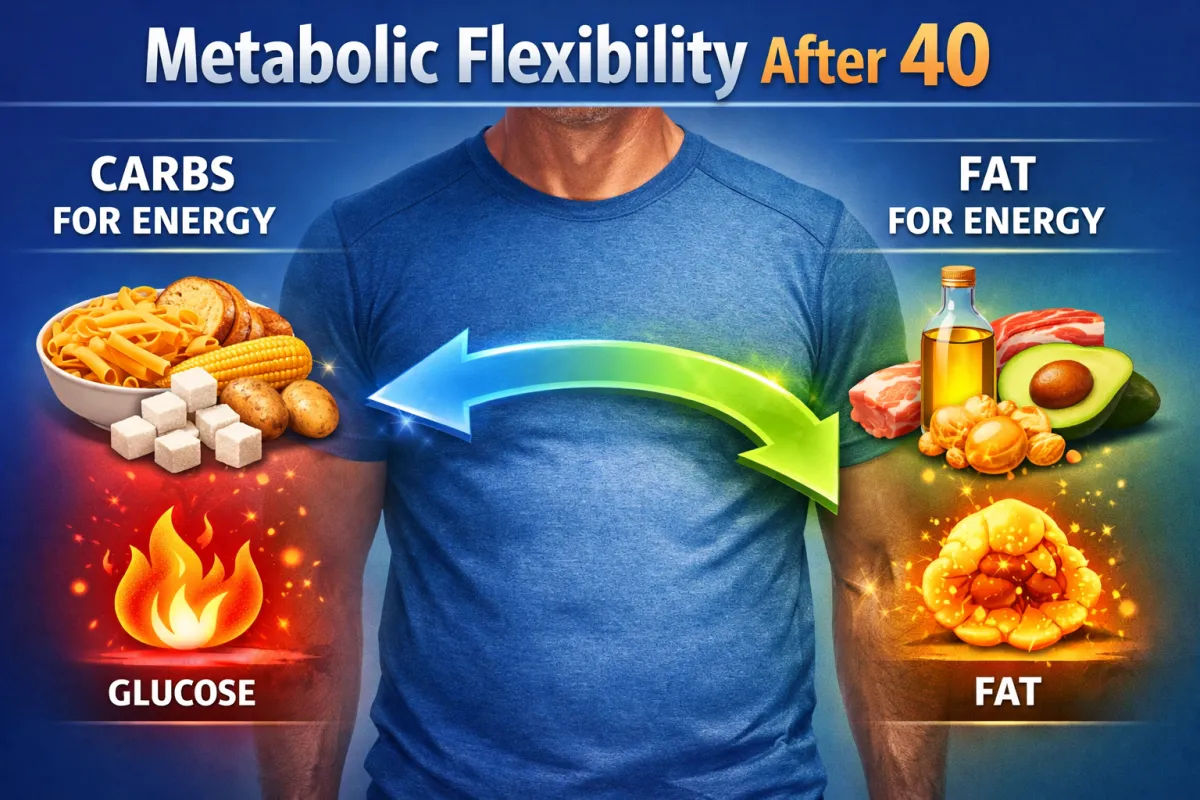
Metabolic flexibility is your body’s ability to efficiently switch between using carbohydrates and fat for energy, depending on what is available and what your body needs.
Why Is Metabolic Flexibility Important?
Metabolic flexibility allows your body to maintain stable energy, regulate hunger, and access stored fat when needed, which makes fat loss more consistent and sustainable.
Can You Improve Metabolic Flexibility?
Yes, metabolic flexibility can be improved by restoring metabolic stability through consistent nutrition, structured meals, and proper recovery.
Introduction
If fat loss feels inconsistent, your energy fluctuates throughout the day, or your body seems unable to tap into stored fat, the issue may not be how hard you are trying—it may be how your metabolism is functioning.
Many men over 40 unknowingly lose the ability to efficiently switch between fuel sources, which creates a state where the body becomes overly reliant on quick energy and less capable of using stored fat.
This is known as reduced metabolic flexibility.
And it is one of the most overlooked factors in fat loss.
How Metabolic Flexibility Actually Works
Your body has two primary fuel sources: carbohydrates and fat.
In a healthy, responsive system, your body can switch between these fuels based on availability and demand.
After eating, your body uses incoming nutrients for energy.
Between meals or during lower-intensity activity, your body shifts toward using stored fat.
This constant switching is what keeps energy stable and allows fat to be used efficiently.
What Happens When Flexibility Is Lost
When metabolic flexibility is reduced, your body becomes less efficient at switching between fuel sources.
Instead of smoothly transitioning into fat-burning between meals, your body remains more dependent on immediate energy, often leading to fluctuations in blood sugar and inconsistent energy levels.
This can show up as:
energy crashes between meals
increased hunger and cravings
difficulty going longer periods without eating
reduced fat loss despite effort
These are not just inconveniences—they are signals that your metabolism is not functioning optimally.
👉 “Signs Your Metabolism Is in Protection Mode”
Why This Happens After 40
Over time, repeated patterns of dieting, inconsistent eating, high stress, and poor recovery begin to shape how your metabolism responds.
After 40, these accumulated signals often lead to a more protective metabolic state, where the body becomes less willing to rely on stored energy and more dependent on frequent input.
When this happens, flexibility decreases.
Your body becomes less adaptable, less efficient, and more resistant to change.
👉 “Why Your Metabolism Slows Down After 40 (And How to Fix It)”
The Connection Between Flexibility and Fat Loss
Fat loss requires your body to access stored energy.
But if your metabolism is not flexible, that process becomes limited.
Instead of using stored fat between meals, your body continues to seek incoming energy, which makes fat loss feel slow, inconsistent, or stalled.
This is why many people feel like they are doing everything right, yet their body does not respond.
It is not just about effort.
It is about capability.
Why Eating Less Doesn’t Fix Flexibility
A common assumption is that eating less will force the body to burn more fat.
But when flexibility is already impaired, eating less often increases stress signals and reinforces dependence on quick energy.
This can make the problem worse, not better.
👉 “Why Eating Less Doesn’t Work After 40”
How to Restore Metabolic Flexibility
Restoring flexibility is not about forcing your body into fat burning.
It is about rebuilding the conditions that allow your body to switch fuels naturally.
This starts with stability.
Consistent meal timing, adequate intake, and predictable patterns help your body regain trust in its energy supply.
Inside the Metabolic Operating System, this is where the 4x4 structure becomes foundational, as it creates a stable rhythm that allows your metabolism to gradually become more responsive.
👉 “How the 4x4 Meal Structure Restores Metabolic Stability”
From Stability to Flexibility
Flexibility is not the starting point—it is the result.
When your metabolism becomes stable, your body begins to regain its ability to shift between fuels without stress or resistance.
Energy becomes more consistent.
Hunger becomes more predictable.
And your body becomes more willing to access stored fat when needed.
This is the transition from protection to responsiveness.
Why This Matters for Men Over 40
For men over 40, metabolic flexibility is one of the most important indicators of metabolic health.
It reflects how well your body can adapt, respond, and regulate energy in a way that supports both performance and fat loss.
Without flexibility, fat loss feels forced.
With flexibility, fat loss becomes more natural and sustainable.
Final Thoughts
Your metabolism is not just about how much energy you burn.
It is about how well your body can use the energy available to it.
Metabolic flexibility is the difference between a system that reacts and a system that responds.
When you restore flexibility, you restore your body’s ability to function the way it was designed to.
Next Step
If your energy feels inconsistent, your hunger feels unpredictable, or fat loss feels stuck:
👉 Take the Metabolic Self-Test
This will show you exactly which metabolic signals are off and what needs to be restored first.


