Why Blood Sugar Swings Cause Fat Gain (After 40)
Why Blood Sugar Swings Cause Fat Gain (After 40)
Blood sugar swings can lead to fat gain by increasing insulin levels, disrupting energy balance, and reducing your body’s ability to access stored fat.
What Are Blood Sugar Swings?
Blood sugar swings occur when glucose levels rise and fall rapidly, often due to inconsistent eating patterns or imbalanced meals.
Can Blood Sugar Affect Fat Loss?
Yes, unstable blood sugar makes fat loss more difficult by increasing hunger, cravings, and dependence on frequent energy intake.
Introduction
If you feel like your energy is inconsistent, your hunger comes in waves, or your cravings seem difficult to control, the issue may not be your discipline—it may be your blood sugar.
For many men over 40, fat gain and stalled fat loss are closely tied to how stable their energy is throughout the day.
When blood sugar is stable, energy is steady.
When it’s not, everything becomes harder.
But this isn’t random.
It’s a signal.
👉 Take the Metabolic Self-Test
If your body isn’t responding the way it used to, this will show you exactly which signals are affecting your metabolism.
What Happens When Blood Sugar Rises and Falls
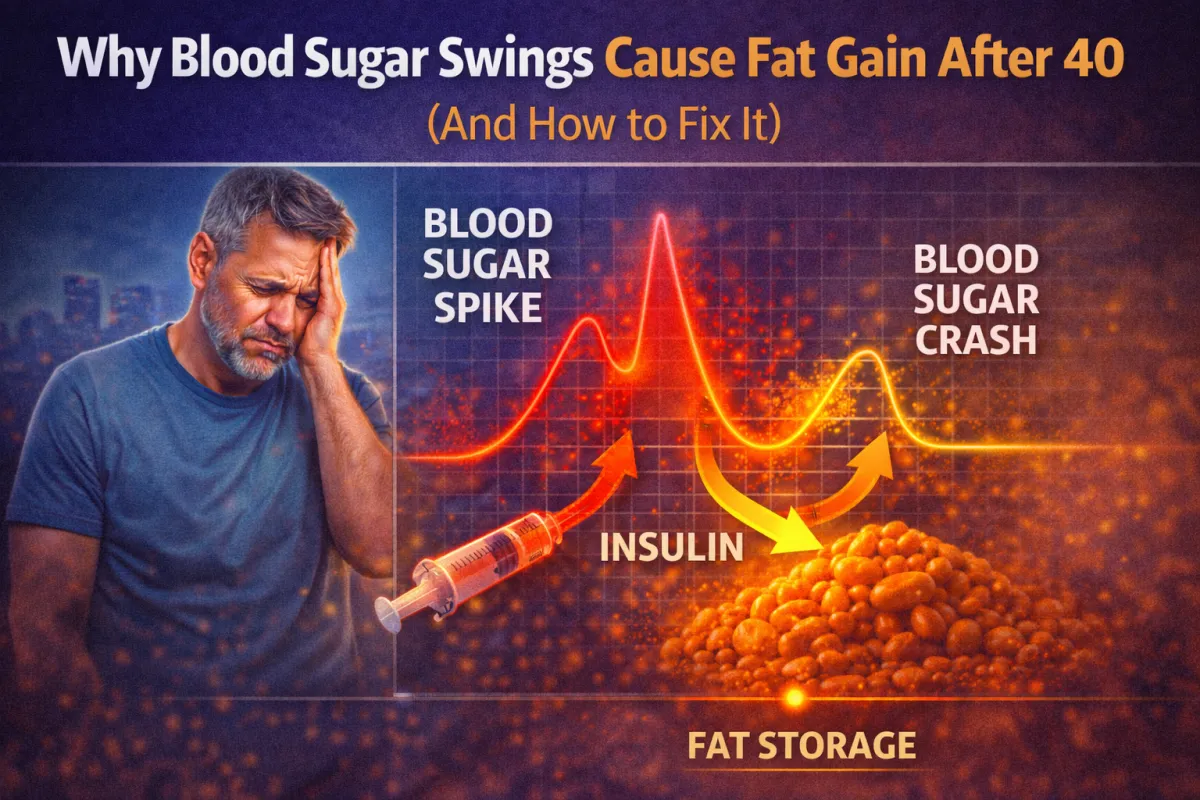
Every time you eat, your blood sugar rises as glucose enters your bloodstream.
Your body responds by releasing insulin to help move that glucose into your cells.
This is a normal and necessary process.
However, when blood sugar rises too quickly and then drops too fast, your body experiences a cycle of spikes and crashes.
This creates instability.
👉 This is where most men get stuck.
How Blood Sugar Swings Lead to Fat Gain
When blood sugar is unstable, your body is constantly trying to correct itself.
Each spike triggers insulin.
Each crash triggers hunger.
This leads to:
more frequent eating
increased cravings
reduced fat burning opportunities
Over time, your body becomes more dependent on incoming energy and less capable of using stored fat.
👉 “How Insulin Affects Fat Storage (After 40)”
Blood Sugar and Fat Burning
For your body to burn fat efficiently, it must be able to go periods of time without needing immediate energy.
But when blood sugar is unstable, your body struggles to make that transition.
Instead of switching into fat-burning mode, it continues to seek quick energy.
👉 “Why Can’t My Body Burn Fat? (And How to Fix It After 40)”
Why This Gets Worse After 40
As your metabolism becomes more sensitive over time, it becomes less tolerant of instability.
Years of inconsistent eating patterns, dieting, and stress create a system that is more reactive and less stable.
This is why:
energy becomes unpredictable
hunger increases
fat loss slows down
👉 “Why Your Metabolism Slows Down After 40 (And How to Fix It)”
The Hidden Connection to Fatigue
Blood sugar swings don’t just affect fat loss—they directly impact your energy levels.
When your blood sugar drops quickly, your energy drops with it.
This leads to:
afternoon crashes
brain fog
reliance on caffeine
👉 “Why You Feel Tired All the Time (And What It Means for Your Metabolism)”
Why Eating Less Makes This Worse
One of the biggest mistakes people make is trying to fix fat gain by eating less.
But when you eat less without structure, you often increase instability.
Your body becomes more reactive, not less.
👉 This is not a calorie problem—it’s a stability problem.
👉 “Why Eating Less Doesn’t Work After 40”
Blood Sugar and Metabolic Flexibility
When your blood sugar is stable, your body becomes more capable of switching between using carbohydrates and fat for energy.
This is metabolic flexibility.
When it’s not, your body becomes dependent on frequent input.
👉 “What Is Metabolic Flexibility (And Why It Matters for Fat Loss After 40)”
👉 If your energy feels inconsistent or your hunger feels unpredictable, take the Metabolic Self-Test to see what’s driving it.
How to Stabilize Blood Sugar
Improving blood sugar is not about eliminating carbohydrates—it is about improving how your body responds to them.
Use Consistent Meal Timing
Regular meal spacing helps your body anticipate energy and reduces large fluctuations.
Balance Your Meals
Protein and fat slow the absorption of glucose and help stabilize energy.
Avoid Constant Snacking
Frequent eating prevents your body from resetting and contributes to instability.
Use Structured Eating
Inside the Metabolic Operating System, the 4x4 structure creates a predictable rhythm that supports stable energy and improved fat utilization.
👉 “How the 4x4 Meal Structure Restores Metabolic Stability”
From Instability to Control
The goal is not to eliminate blood sugar fluctuations completely.
The goal is to reduce the extremes so your body can operate in a more stable and predictable way.
When this happens:
energy improves
hunger stabilizes
fat loss becomes more consistent
Why This Matters for Fat Loss After 40
Fat loss is not just about how much you eat—it is about how your body is able to use energy.
When blood sugar is stable, your body becomes more efficient.
When it is not, everything becomes harder.
Final Thoughts
Blood sugar is one of the most important signals in your metabolism.
When it is stable, your body functions better.
When it is not, fat gain becomes more likely.
If your energy is unstable, your metabolism is unstable.
Next Step
👉 Take the Metabolic Self-Test
This will show you exactly which metabolic signals are affecting your body—and what to fix first.
Keywords
blood sugar and fat gain
blood sugar swings
insulin and fat storage
fat loss after 40
metabolism and blood sugar
energy crashes
how to stabilize blood sugar
metabolic flexibility


